Custom Lightweight Gaming Mice
An ongoing journey with modifying top-tier gaming mice to reduce their weight drasticly. These designs are being sold online on my Cults3D profile for others to 3D-print and enjoy.
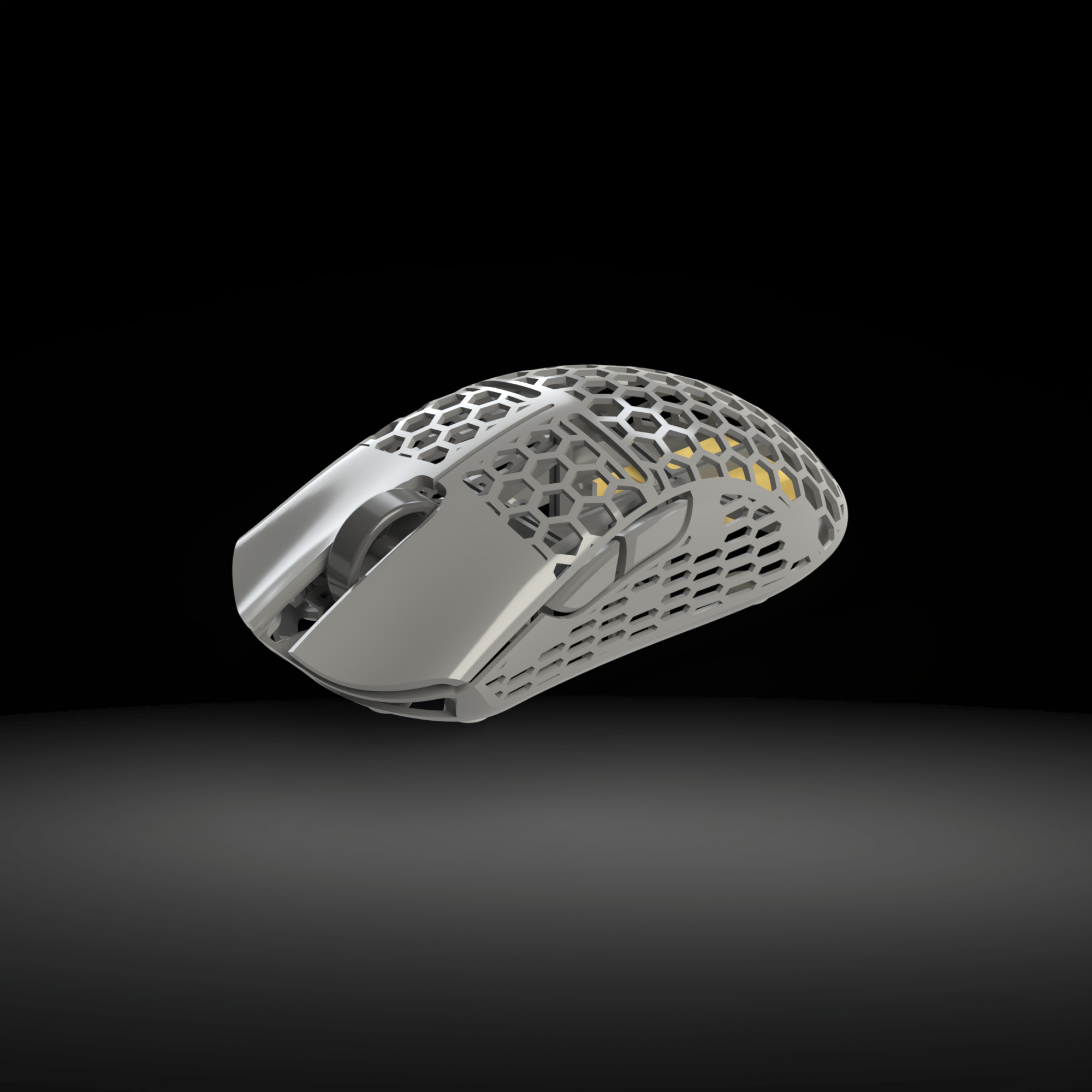
Project Description
My interest in lightweight gaming mice started around six years ago, when I first modified a Logitech G305 Lightspeed. Since then, I have continued experimenting with mouse hardware, weight reduction and custom shells. When the Razer Viper V2 Pro became one of the strongest gaming mice on the market, I bought it for its sensor performance, low weight and high polling rate. Later, Finalmouse released the ULX series. I liked the shape and extremely low weight, but rather than replacing an already high-end mouse, I decided to redesign the Viper V2 Pro around the electronics I already had. That first conversion became the starting point for an ongoing series of lightweight gaming mouse designs. Over several generations, I developed new shells for the Viper V2 Pro, Viper V3 Pro and Viper V4 Pro, while retaining the original electronics and progressively improving weight, stiffness, assembly, click feel and manufacturability. The project has since grown from a personal modification into a small collection of finished designs that I sell through my Cults3D profile for others to 3D-print and assemble themselves.
To protect intellectual property, 3D models will not be shown for this project.
Design Evolution
Viper V2 Pro — ULX Lion
The first complete conversion was designed around the internals of the Razer Viper V2 Pro and the external shape of the Finalmouse ULX Lion. This project was my first extensive use of surface modelling. The external geometry was reverse engineered from a 3D scan and reconstructed into a clean CAD surface model. The first iteration already provided a close approximation of the reference shape, while the second iteration reached approximately 99% geometric accuracy after refining the scan alignment and surface definition. This refined second-generation shell geometry was then used as the basis for the later mouse projects. The first design consisted of two printed components and achieved a fully assembled weight of approximately 38.5 grams, using the complete stock electronics and PLA+, compared to the original 58-gram Viper V2 Pro. A later revision changed the internal architecture to a separate structural frame and outer shell. This simplified assembly, slightly reduced weight, and improved the surface quality of the printed housing.
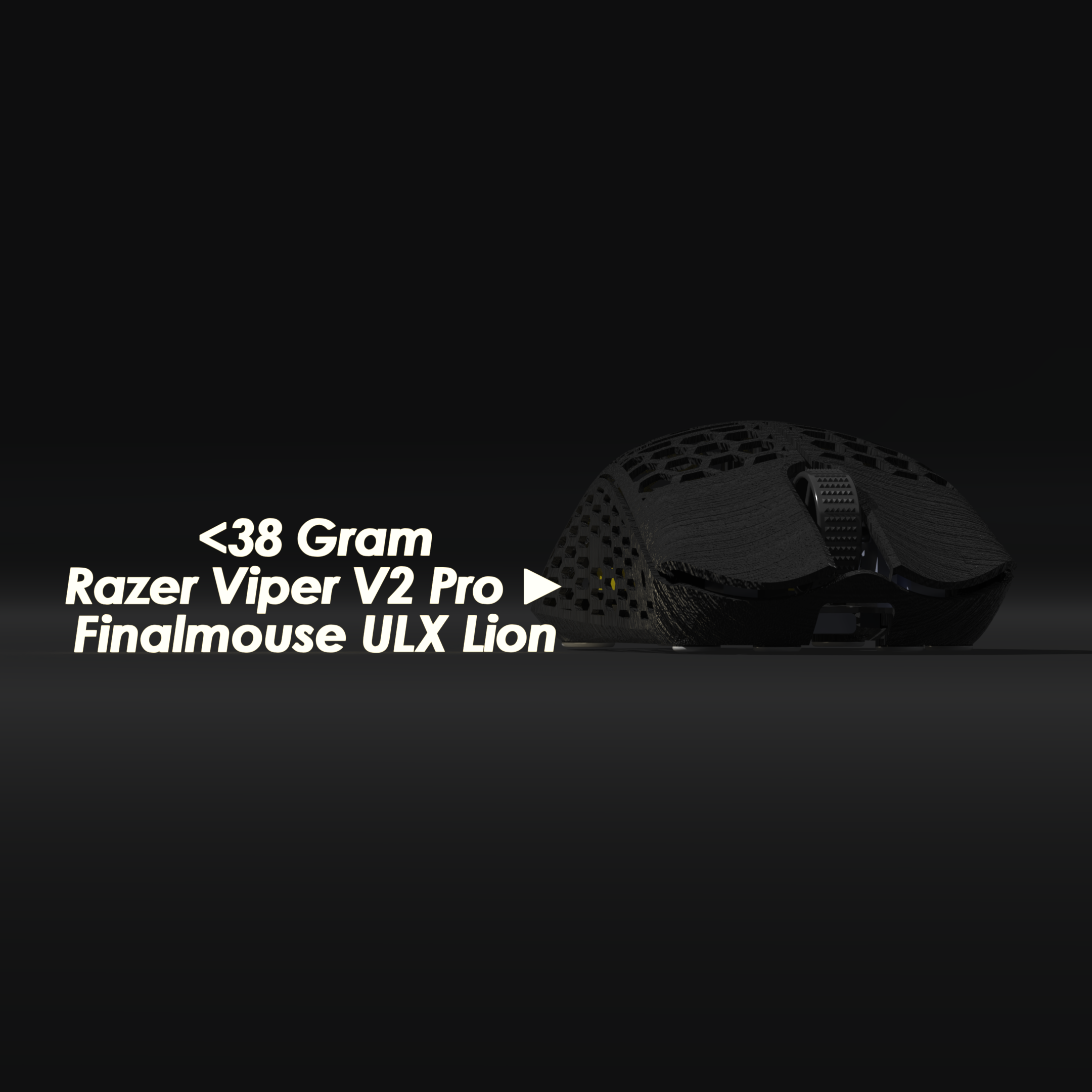
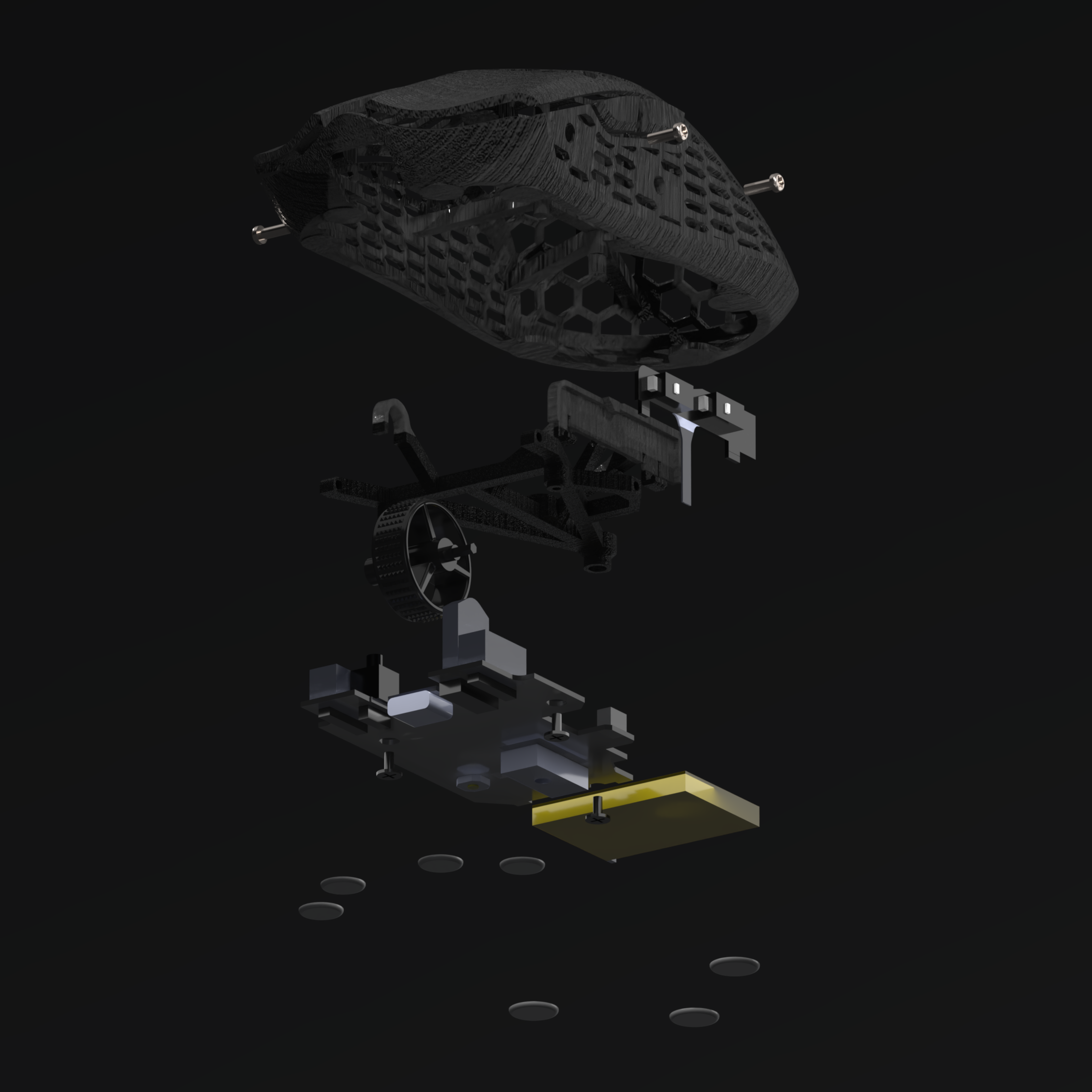
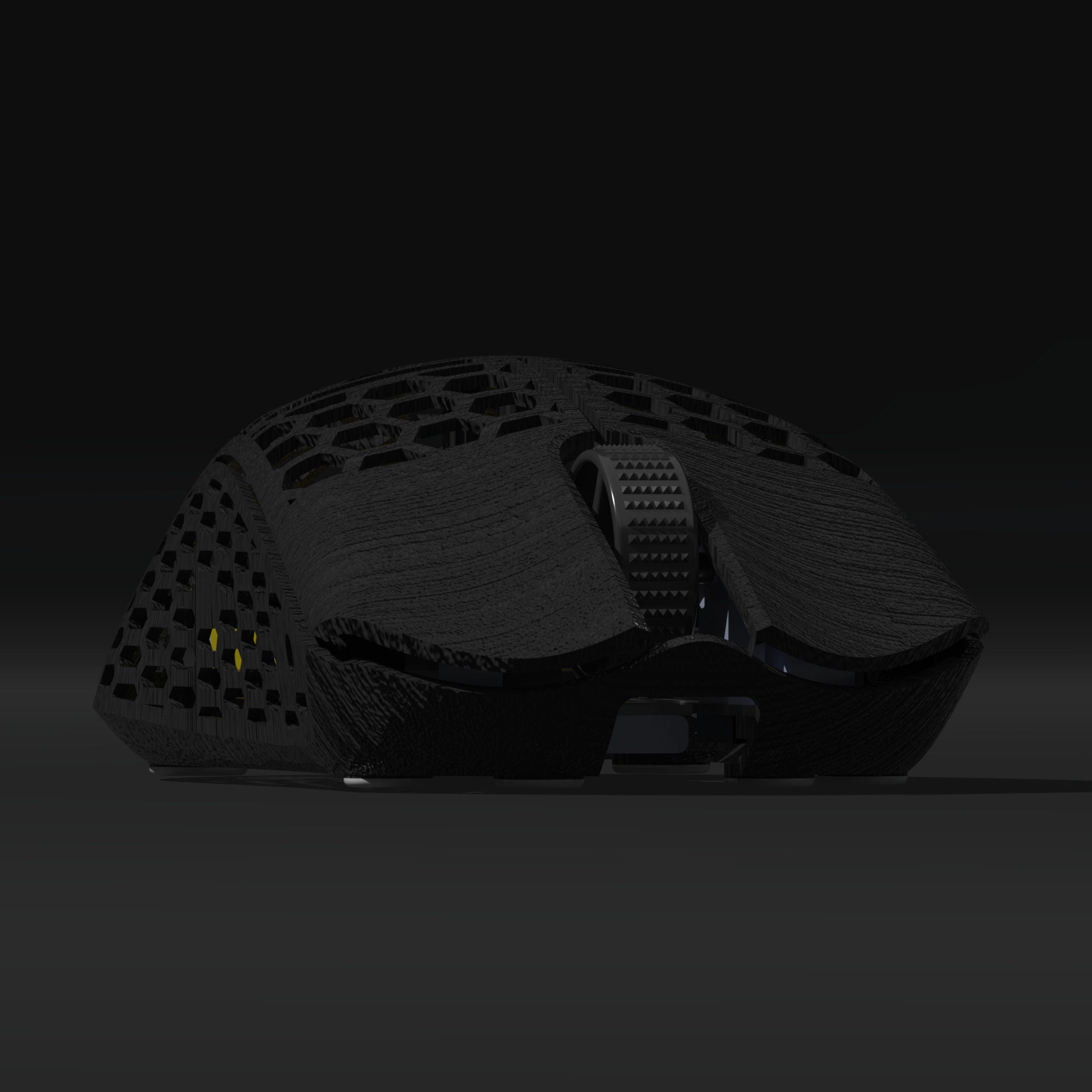
Renders from the Viper V2 Pro — ULX Lion product page.
Viper V3 Pro — ULX Lion
For the next generation, I redesigned the concept around the Viper V3 Pro. Rather than adapting the previous architecture, the housing was redesigned to integrate the required structure into a single printed shell, reducing the assembled weight to approximately 36 grams compared to the stock weight of 54 grams.
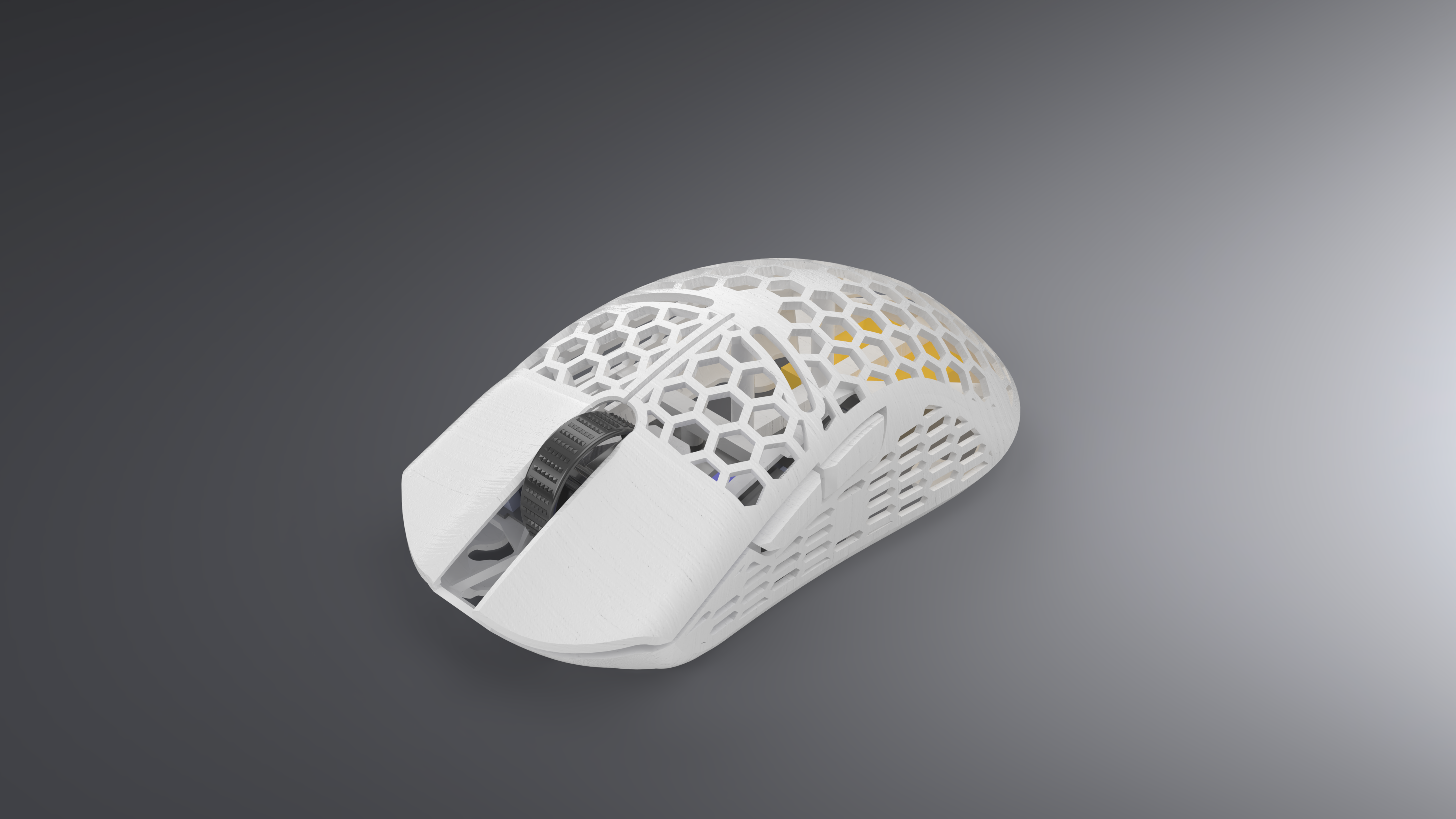
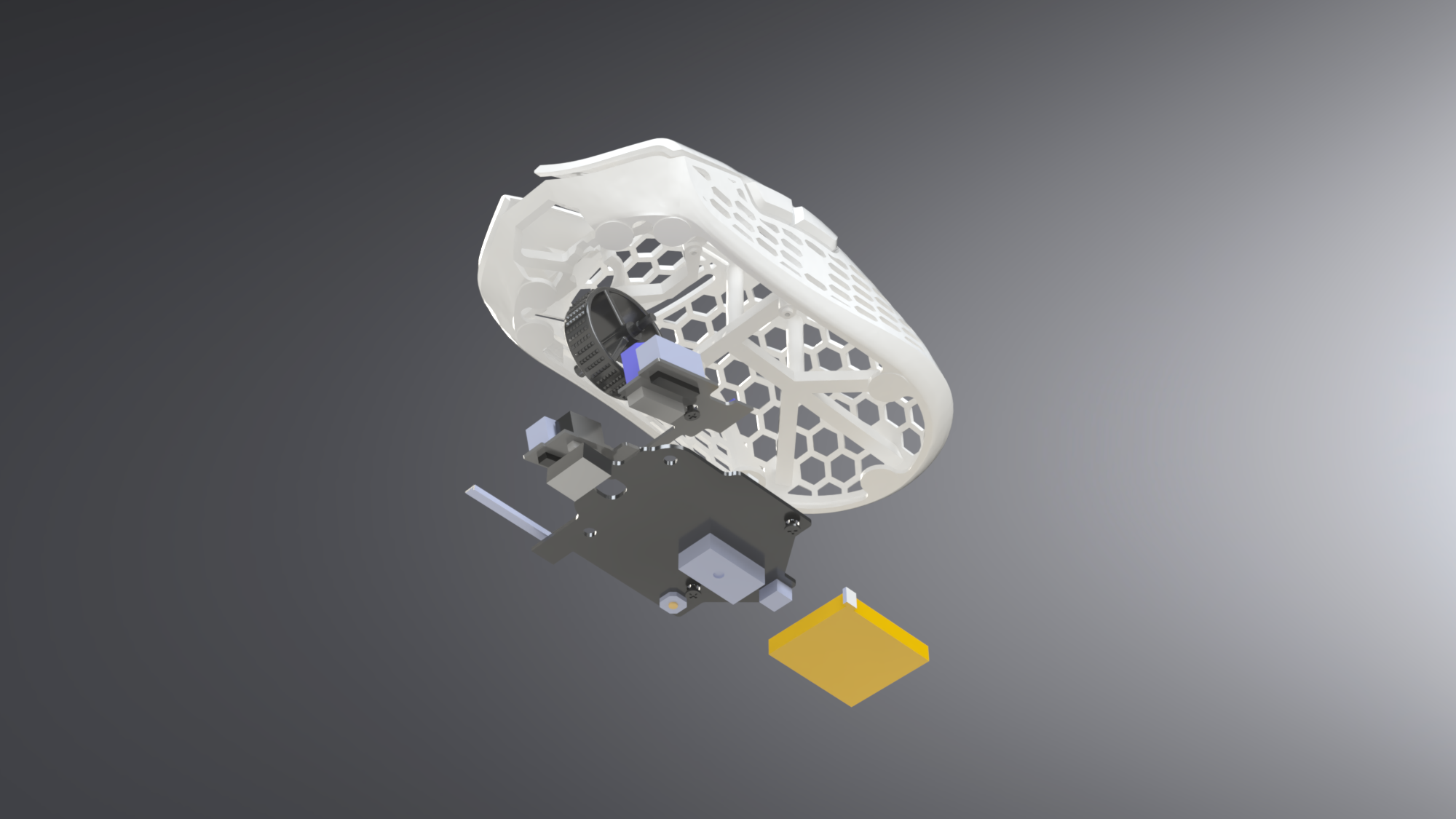
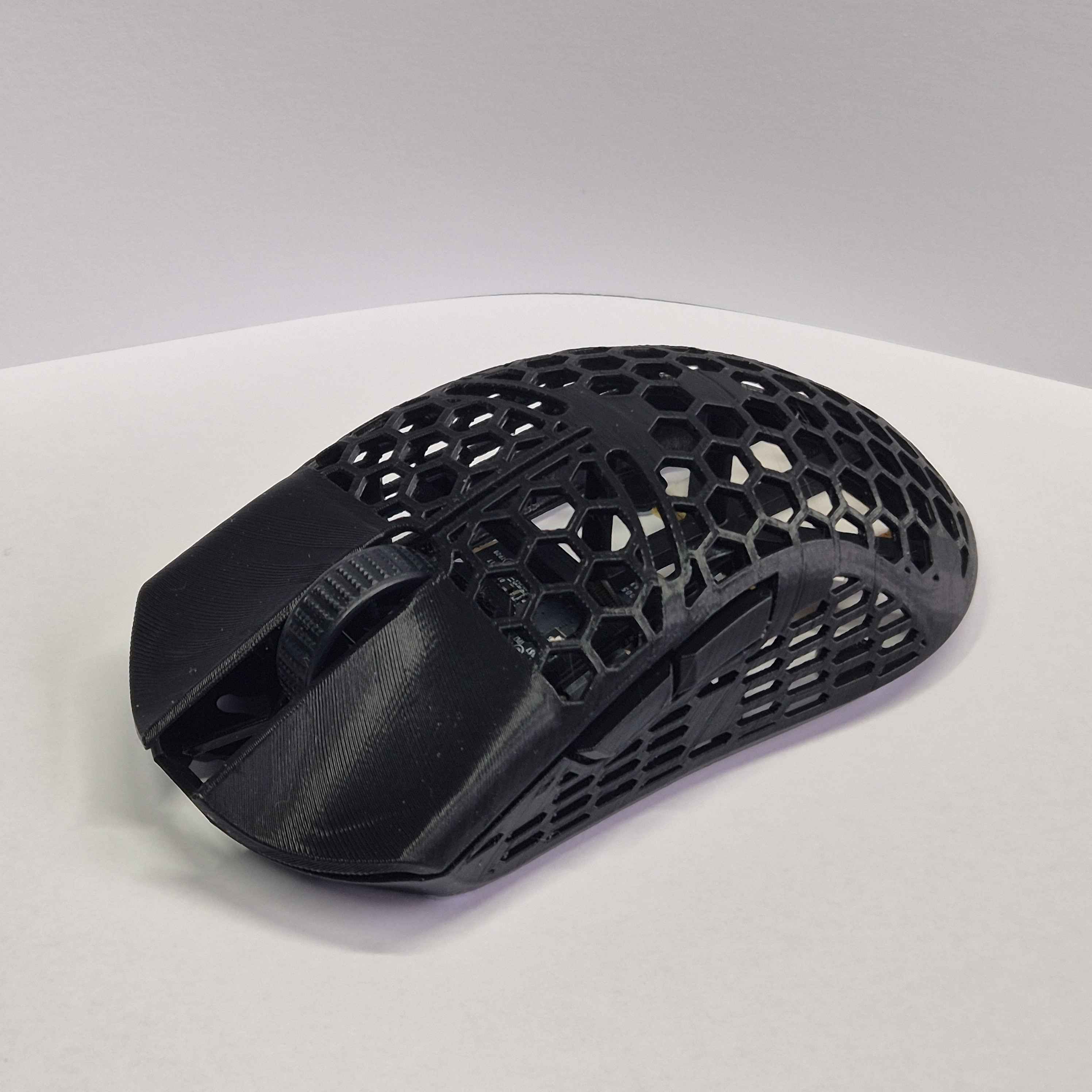
Renders and prototype of the Viper V3 Pro — ULX Lion conversion.
Viper V3 Pro — ULX Tiger
The third major design represented a more fundamental revision of both the shell architecture and my design methodology. The larger ULX Tiger geometry was combined with the Viper V3 Pro electronics while still achieving a weight below 36 grams. This made the final design lighter than the 38-gram Finalmouse ULX Tiger it was based on, despite retaining the stock Viper V3 Pro electronics. Despite the larger shell, the design became easier to assemble, easier to manufacture and structurally more refined. A significant amount of development focused on the main mouse buttons. Their geometry was iterated to improve stiffness, left-right consistency, pre-tension and pre-travel. Later generations introduced an adjustable pre-tension mechanism, allowing the click behaviour to be tuned mechanically after assembly. Grip templates were also developed so that universal grip tape could be cut accurately to the shell geometry.
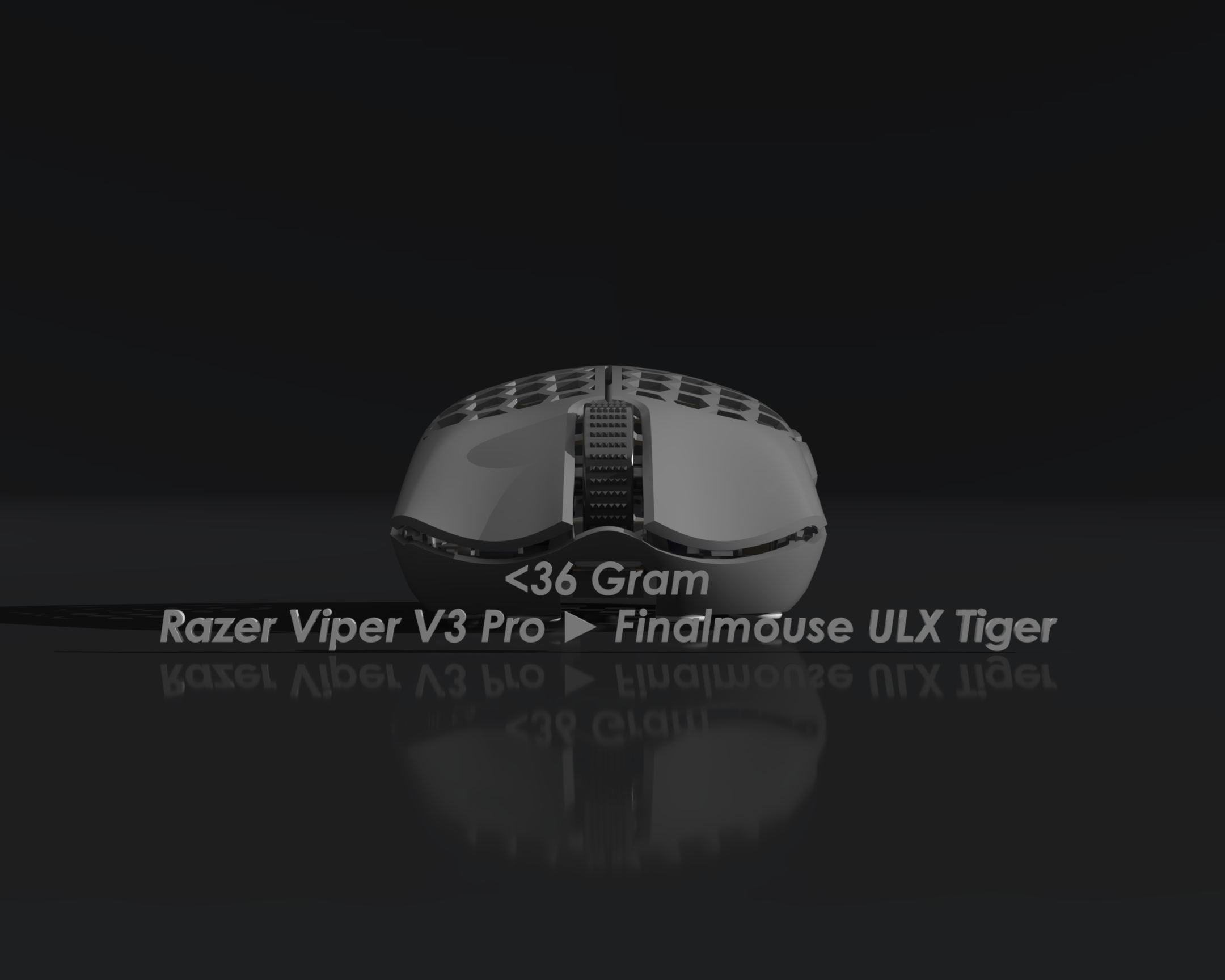
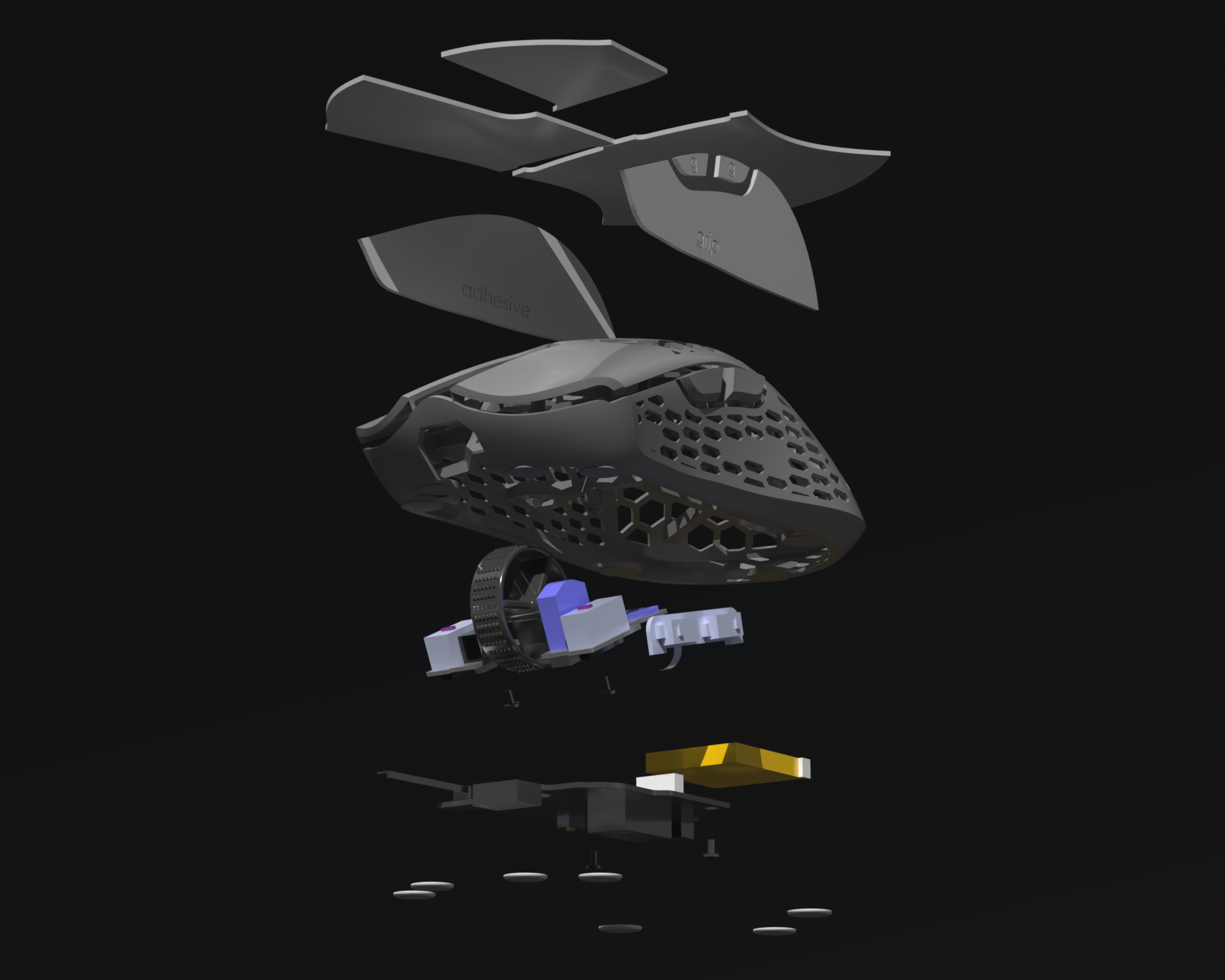
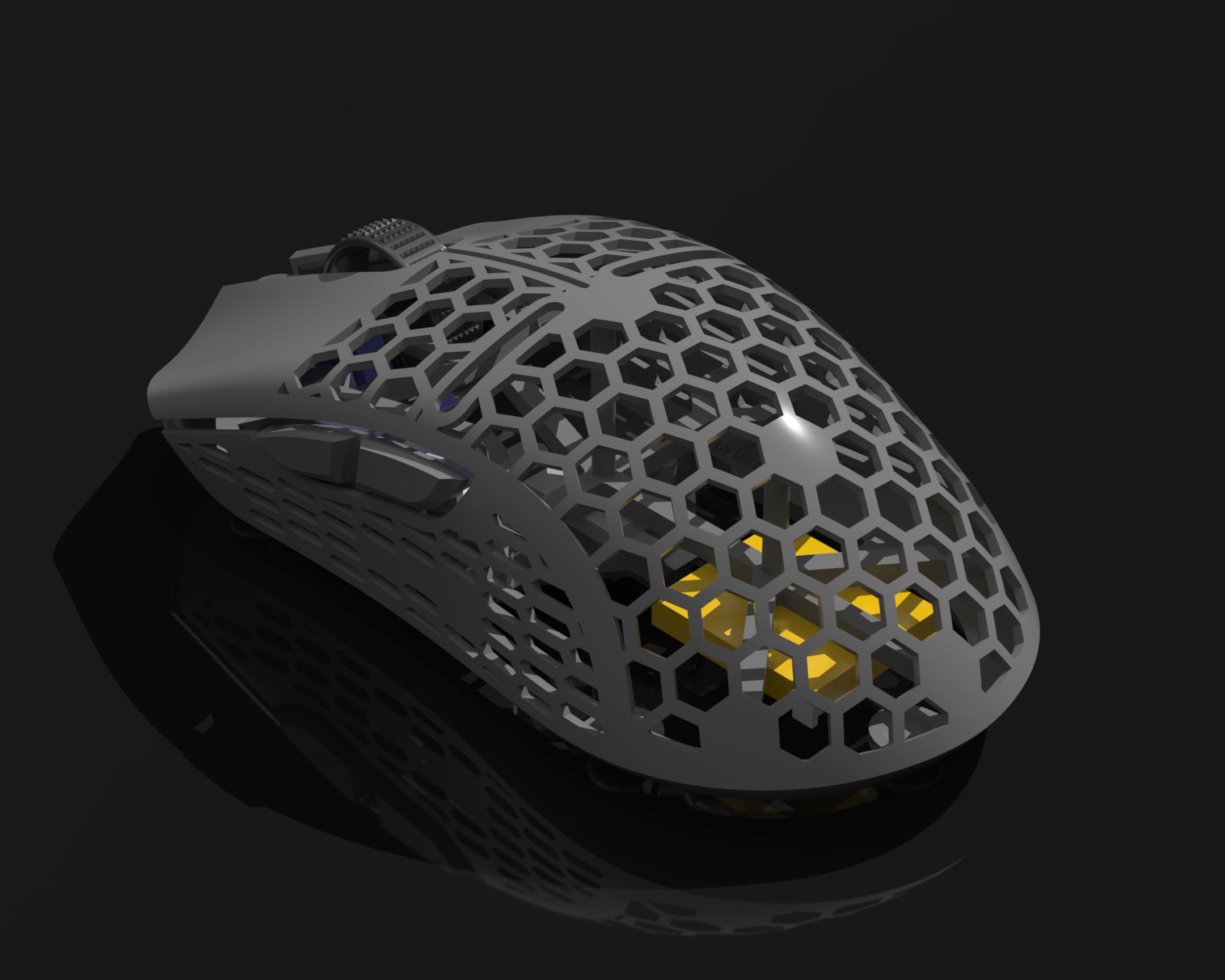
Renders from the Viper V3 Pro — ULX Tiger product page.
Viper V4 Pro — ULX Tiger
The latest design adapts the developed architecture to the Razer Viper V4 Pro. At 34 grams fully assembled, it is currently the lightest mouse in the series while still retaining the complete stock electronics and still being printed out of standard PLA+. The weight could be further reduced to 30.7 grams by printing it out of nylon using SLS or MJF technology. By this stage, many features developed throughout the earlier projects had become part of a reusable design approach, including:
- adjustable main-button pre-travel
- grip templates
- multiple shell weight-saving pattern configurations
- FDM-oriented geometry
- preconfigured 3MF files for manufacturing
- improved structural reinforcement
- consideration for alternative manufacturing methods such as resin printing, MJF printing and SLS printing.
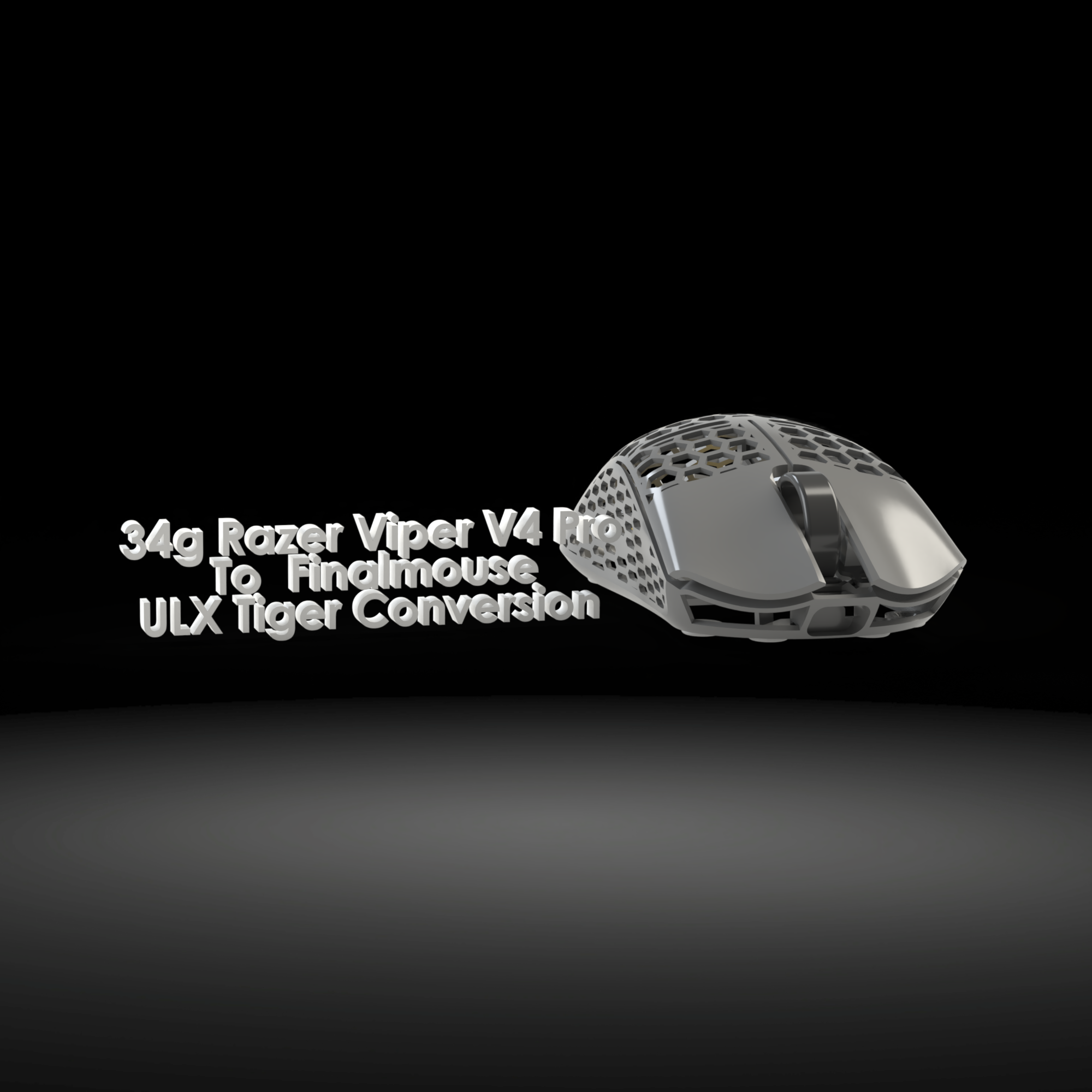
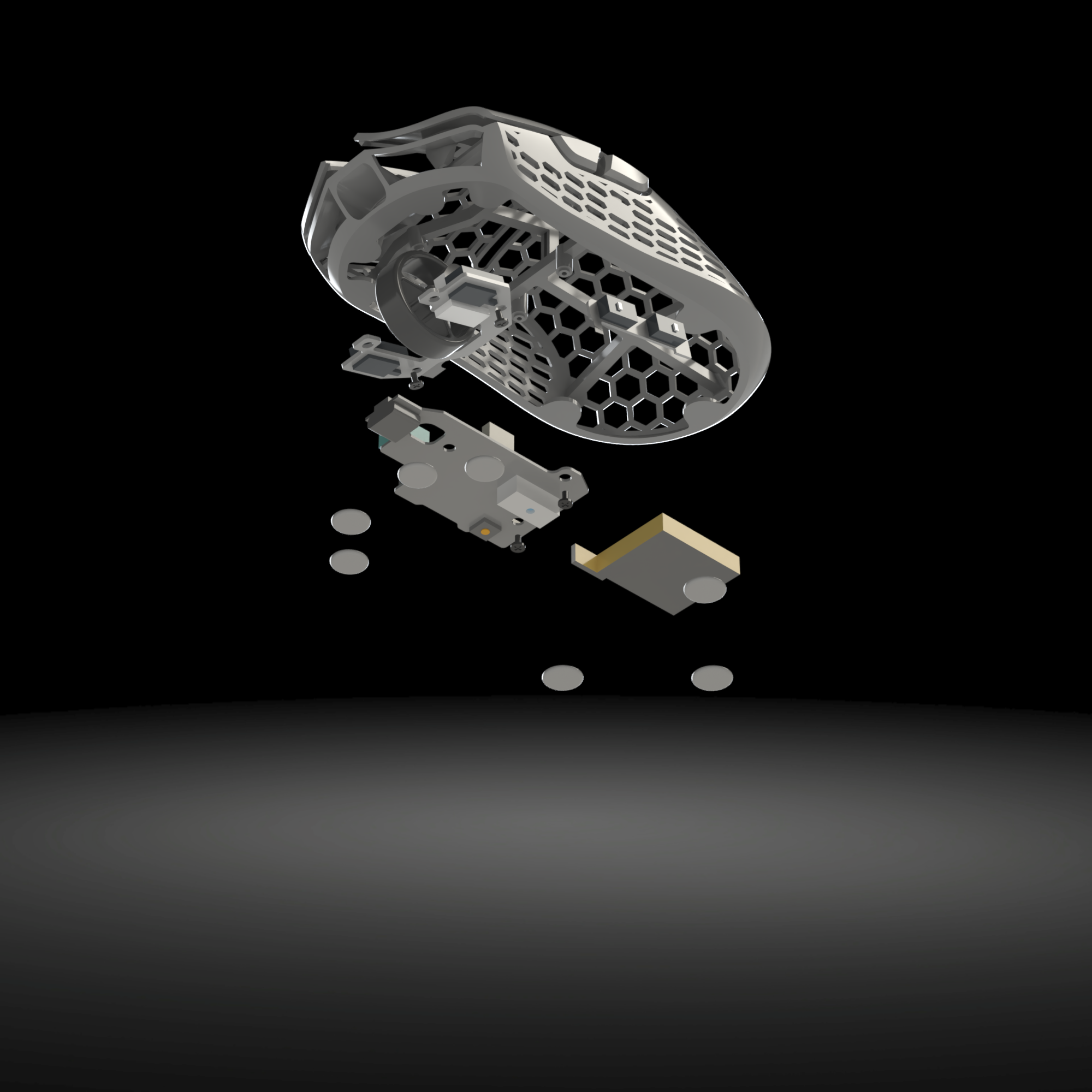
Renders from the Viper V4 Pro — ULX Tiger product page.
Engineering Approach
A recurring challenge throughout the project was reducing mass without compromising stiffness, assembly quality, or mouse feel. For each generation, material was removed primarily from low-load regions while areas surrounding the PCB mounts, mouse buttons, grip surfaces and structural connections were reinforced. Physical prototypes were essential. Small changes in geometry could noticeably affect shell flex, click force, pre-travel and print reliability. Each mouse therefore went through repeated cycles of CAD modification, printing, assembly and testing. Another important constraint was manufacturability. The designs were intentionally developed so that they could be produced using conventional FDM printers and commonly available materials rather than requiring industrial manufacturing processes.
Selling Designs
The designs are sold through my Cults3D profile, which added a practical product-development aspect to the project. Besides designing and testing the mice, I also create the product documentation, prepare the printable files and provide support to customers who build the designs themselves. Customer feedback has been useful during development. Questions about printing, assembly, tolerances and compatibility helped identify areas where the design or documentation could be improved. For some customers I also provide small customisations, such as alternative weight-saving patterns or adjustments for specific printing preferences. This has made the project a combination of engineering, product documentation and customer support rather than only a personal design exercise.
Result
The project developed from a single personal mouse modification into a small family of engineered conversion shells spanning multiple hardware generations. The designs are now sold online and are being printed and assembled by other users, which provided an additional validation of their manufacturability and usability outside my own setup. The project became a long-term exercise in surface modelling, reverse engineering, lightweight structural design, tolerance management, design for additive manufacturing and technical customer support.
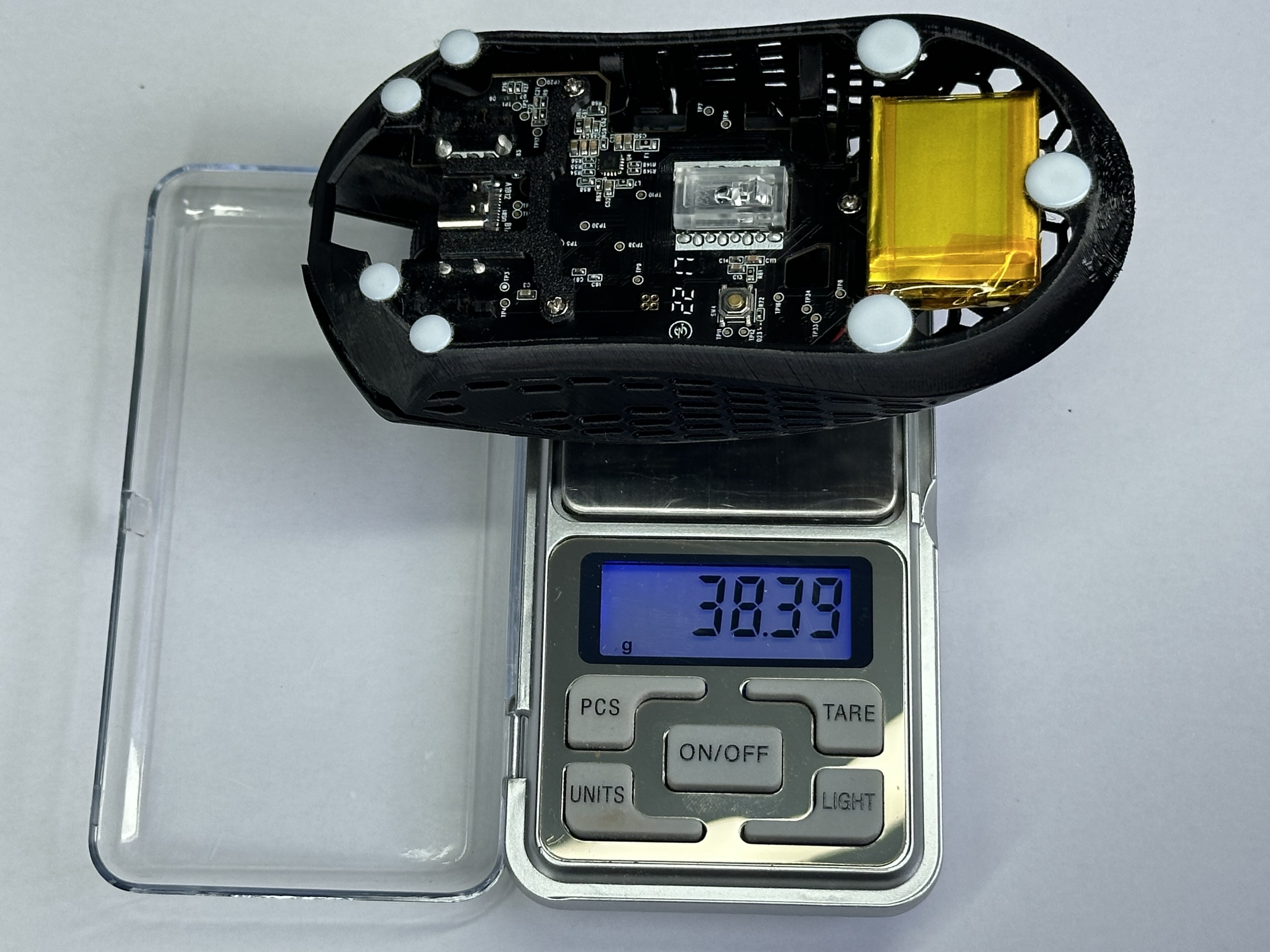
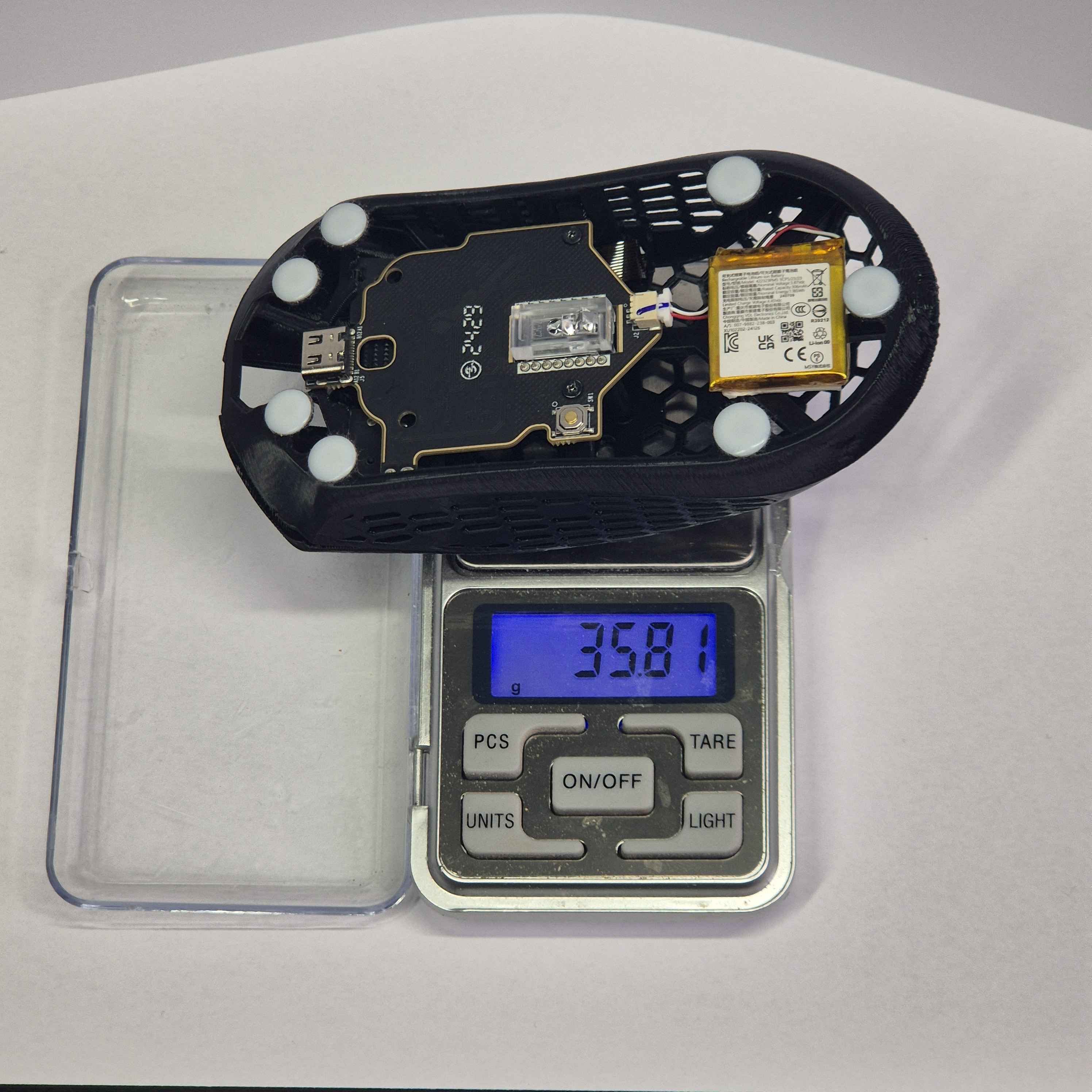
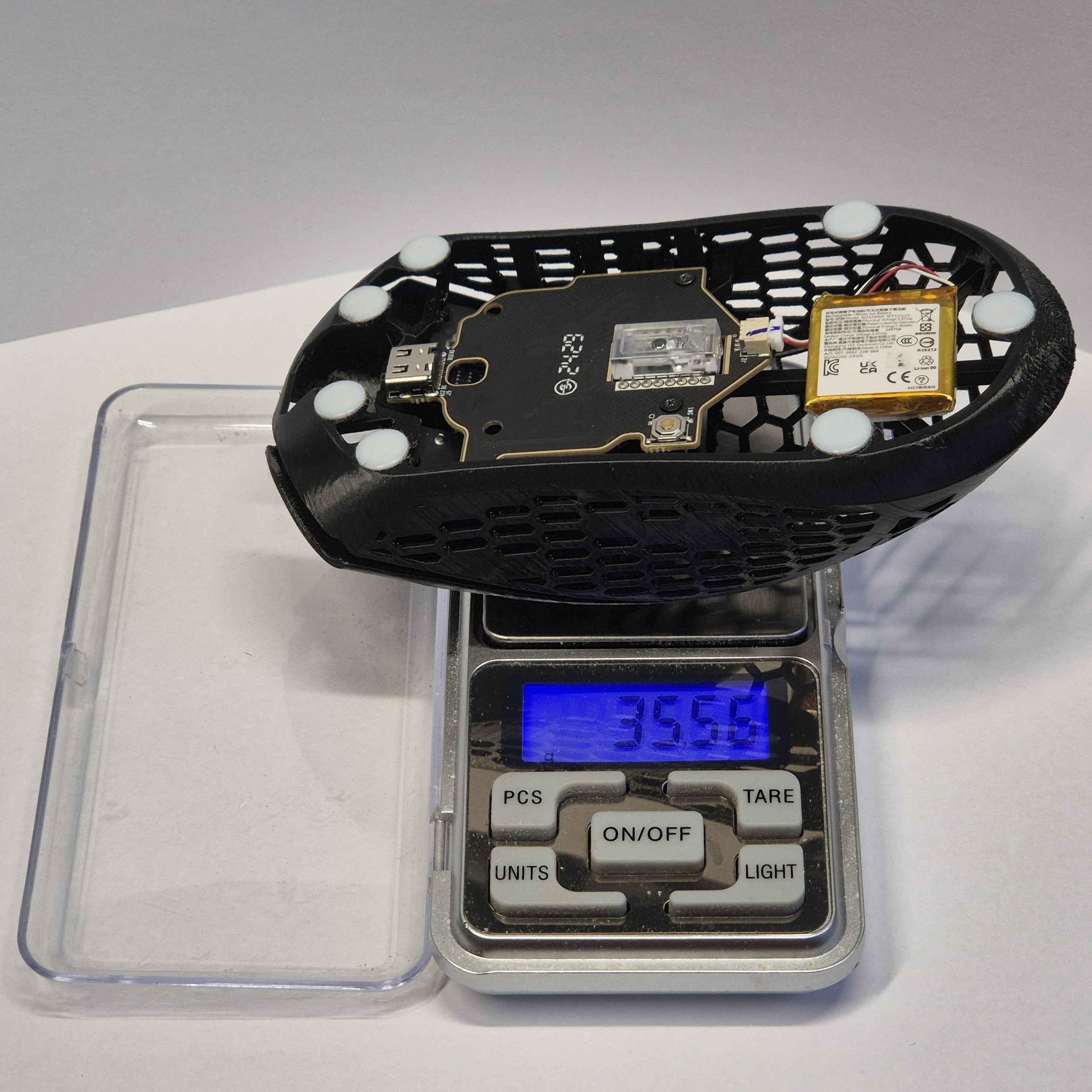
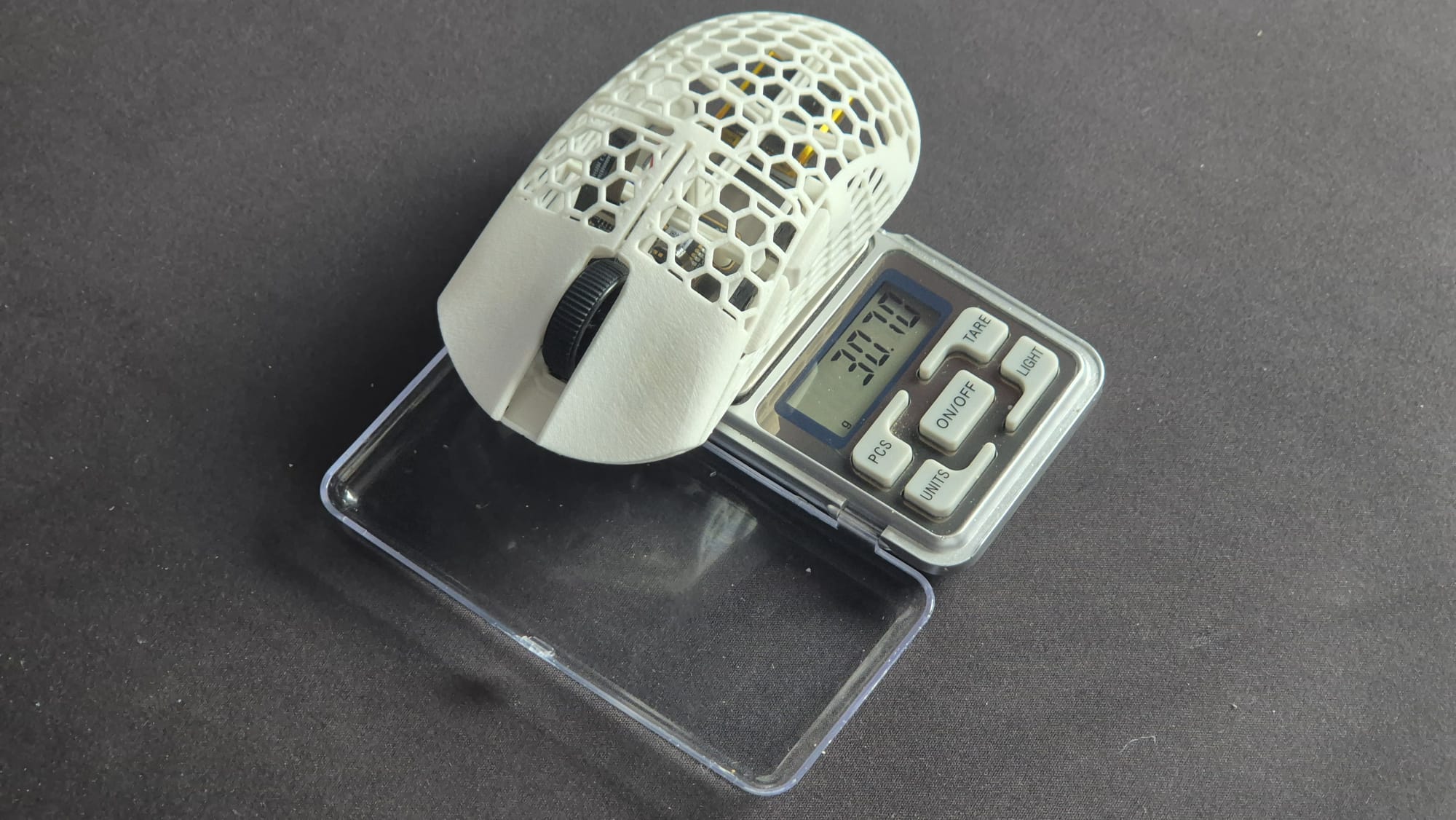
Resulting weights after the conversion kit for the Viper V2 Pro - Lion, Viper V3 Pro - Lion, Viper V3 Pro - Tiger and the Viper V4 Pro - Tiger variant.
Viper V2 Pro to Finalmouse ULX Lion conversion
Product page of the Viper V2 Pro — ULX Lion design
Viper V3 Pro to Finalmouse ULX Tiger conversion
Product page of the Viper V3 Pro — ULX Tiger design
Viper V4 Pro to Finalmouse ULX Tiger conversion
Product page of the Viper V4 Pro — ULX Tiger

Cults3D
A collection of my custom 3D-printable designs and modification kits